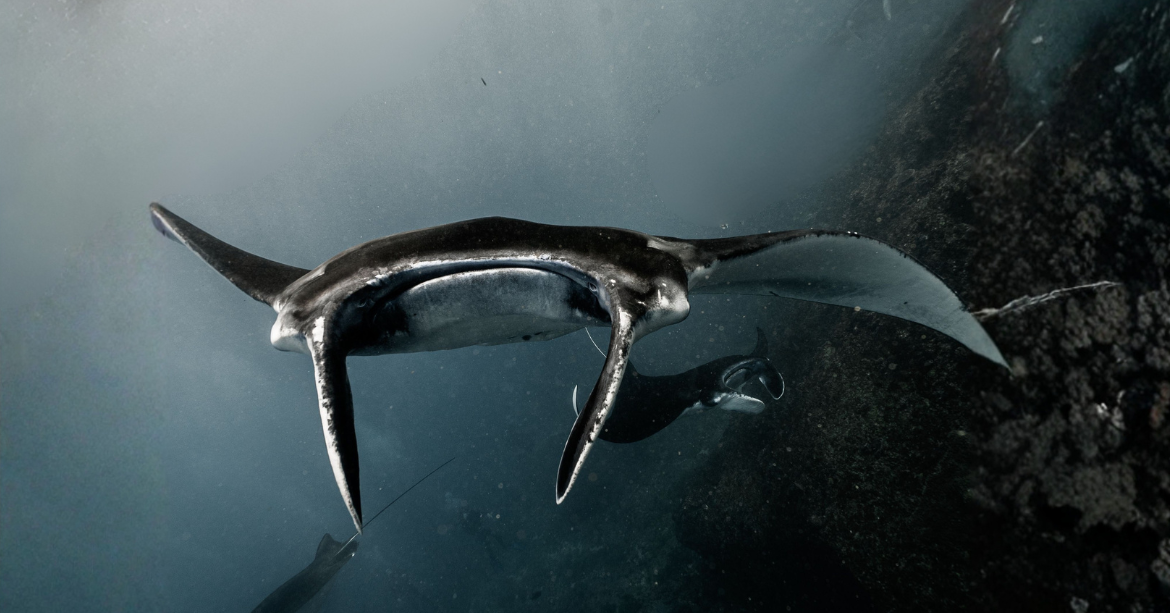
When news coverage highlighted footage of a reef manta ray off Nusa Penida, Indonesia, missing a severe chunk of its back end from a shark bite, it offered a stark look at the harsh realities of marine life.
While headlines naturally focused on the dramatic injury, the story underscores a crucial element of modern ocean conservation: how researchers actually knew who this ray was.
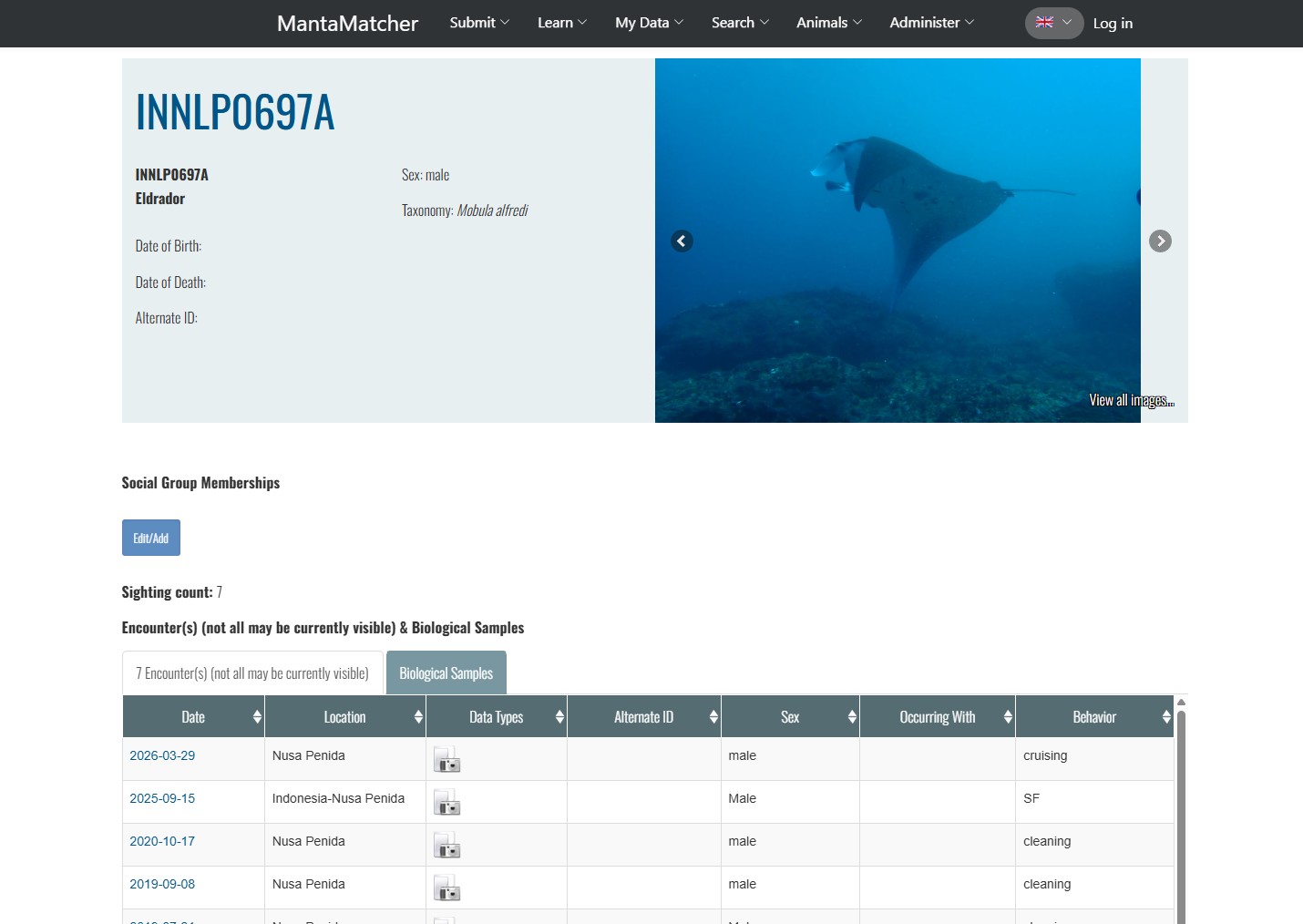
The footage was captured by divers, who brought it to our partners at the Marine Megafauna Foundation (MMF). When they reviewed the footage, they ran the ray's unique belly spot patterns through our Wildbook specialized in manta rays, MantaMatcher. The result was an instant identification: it turned out that this injured individual was Eldrador, an adult male recorded completely healthy in the region just months prior.
The Power of Everyday Sightings
Every manta ray carries a distinct arrangement of spots on its belly, a biological fingerprint as unique as a human’s. Because marine biologists can't be in the water everywhere at once, contributions from recreational divers, guides, and underwater photographers are vital.
When everyday ocean enthusiasts upload their casual photos and videos, they build a living timeline for thousands of individual animals. In Eldrador's case, past community submissions gave MMF scientists the exact baseline needed to verify his identity, pinpoint when the injury occurred, and monitor his journey toward recovery.
If you’ve followed marine conservation tech, you’ve likely heard names like MantaMatcher, Flukebook, or Sharkbook. Behind these specialized databases is a unified engine: our Wildbook.
Wildbook serves as an open-source platform powering species-specific "books" across marine and terrestrial wildlife. MantaMatcher is the Wildbook instance dedicated to global ray populations, operated in close partnership with MMF. Using computer vision and pattern-matching algorithms, Wildbook automates individual identification, turning what used to be hours of manual photo sifting into seconds.
Why Every Individual Counts
While a shark bite is a natural event in the wild, identifying an individual like Eldrador carries profound significance for species conservation.
Reef manta rays are globally listed as Vulnerable on the IUCN Red List. They grow slowly, reach maturity late, and females give birth to only one pup every few years. Because their populations face heavy cumulative stress from climate change and human activity, like net entanglements and unsustainable fishing, the survival of every mature adult directly impacts the stability of the local population.
When researchers can identify a specific ray following a severe trauma, they gain vital insights into how resilient these animals are under pressure and how effectively they heal. Over time, these individual records build the empirical baseline MMF needs to advocate for stronger Marine Protected Areas (MPAs) and localized habitat protections.
What Happens Next?
Mantas are remarkably tough animals, known for their incredible capacity to regenerate tissue and adapt after major injuries. MMF researchers will continue monitoring the Nusa Penida area over the coming months to track Eldrador’s progress.
Eldrador’s story proves that a simple dive photo is never just a cool souvenir. Through smart technology, dedicated field teams like MMF, and an engaged diving community, everyday moments underwater become the very data powering the future of ocean conservation, ensuring these resilient species continue to thrive.