"Human-elephant conflict" is the term for what happens when elephants and people compete for the same land—elephants raiding crops, damaging homes, and sometimes killing villagers, while people retaliate by injuring or killing elephants—a cycle that intensifies as farms and settlements push into places that elephants have always used. In 2010, an Indian government task force studying human-elephant conflict reached a sobering conclusion: Both sides, it found, are victims. "Both are victims of victims."
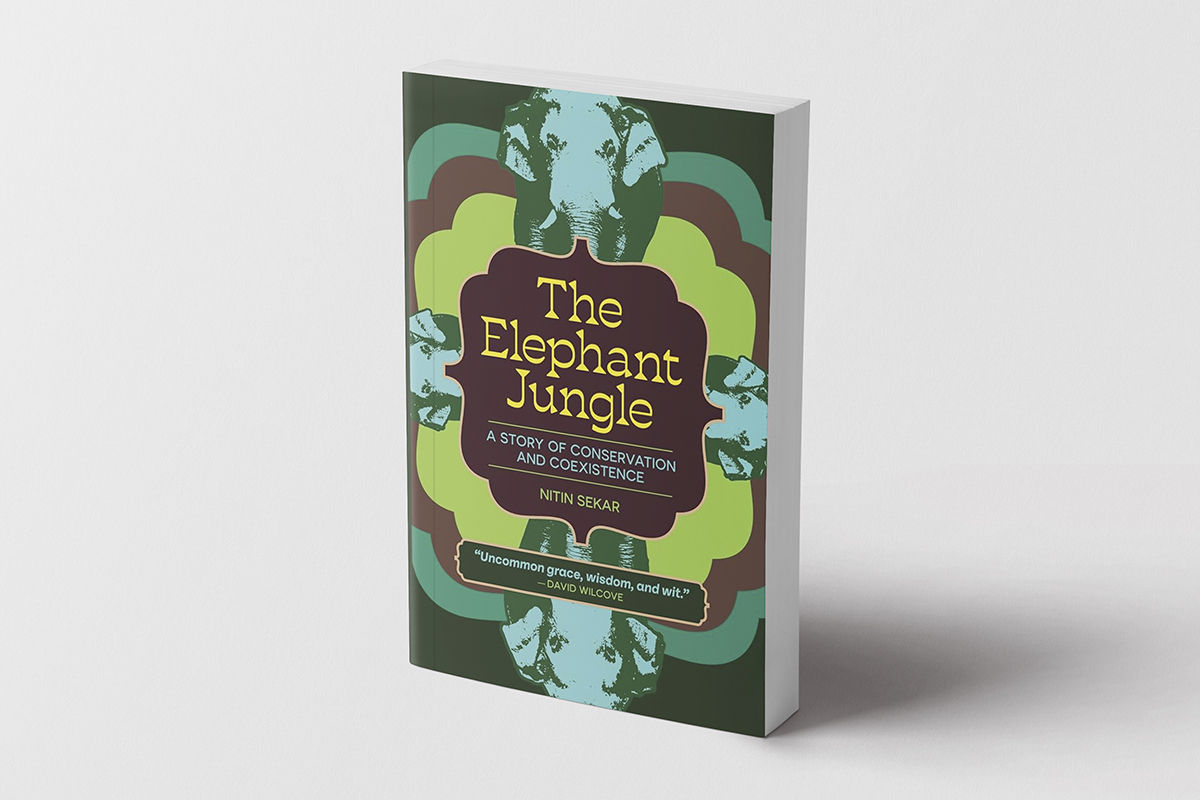
That idea sits at the center of The Elephant Jungle: A Story of Conservation and Coexistence, the new US release from our colleague Nitin Sekar, CXL's Director of Co-Existence and Alternative Proteins. It's a book that asks a difficult question: who bears the cost when people and wildlife inhabit the same shrinking ground?
Long before he joined CXL, Sekar arrived at Buxa Tiger Reserve in West Bengal as a doctoral student, hoping to study how elephants disperse seeds and quietly shape the forests they move through. What he found was messier. His story unfolds alongside that of Netra Sharma, his field assistant, a villager born on the reserve's edge. Through Sharma's life, we get a front row seat to the realities of elephant coexistence. Though the elephants are wonderous, they're also responsible for destroying crops overnight and killing his neighbors. Meanwhile, timber smugglers are pillaging the tiger reserve, which hasn't actually been home to tigers for twenty years. The people who live in the forest are often the scapegoats for its decline. When the book first appeared in India, The Hindu's Neha Sinha noted that Sekar "cares both for the individual animal and the individual person."
Writing in Scroll.in, Namrata Kolachalam noted that "the story is not aimed at villainising any one person or group." Conservation stories are rarely so black and white. Forest officials are by turns negligent and heroic. A crackdown on smuggling can gut the local economy that quietly depended on it. Beneath all of it runs an argument that conservationists have been saying for decades: the cost of protecting wildlife often falls hardest on the people least able to absorb it.
We're sharing this not only because Nitin is one of ours, though we're glad he is. We're sharing it because the book models a way of thinking that's an important contribution to conservation. It's tempting to treat coexistence as an engineering problem, especially if you're an organization that creates conservation technologies. Better sensors, data, and other tools may serve as force multipliers to conservationists on the ground as well as researchers. But all of it comes up short if we ignore the underlying incentives and power structures that drive conservation problems in the first place.
The Elephant Jungle was first published in India in 2022 as What's Left of the Jungle, where it was longlisted for the Tata Literature First Book Award and shortlisted for the Green Literature Festival's Honour Book Award. The ecologist Ruth DeFries, a MacArthur Fellow, has recommended it to anyone who wants to take the realities of conservation seriously.
You can find a copy of the book at Bookshop.org, Amazon, or B&N.