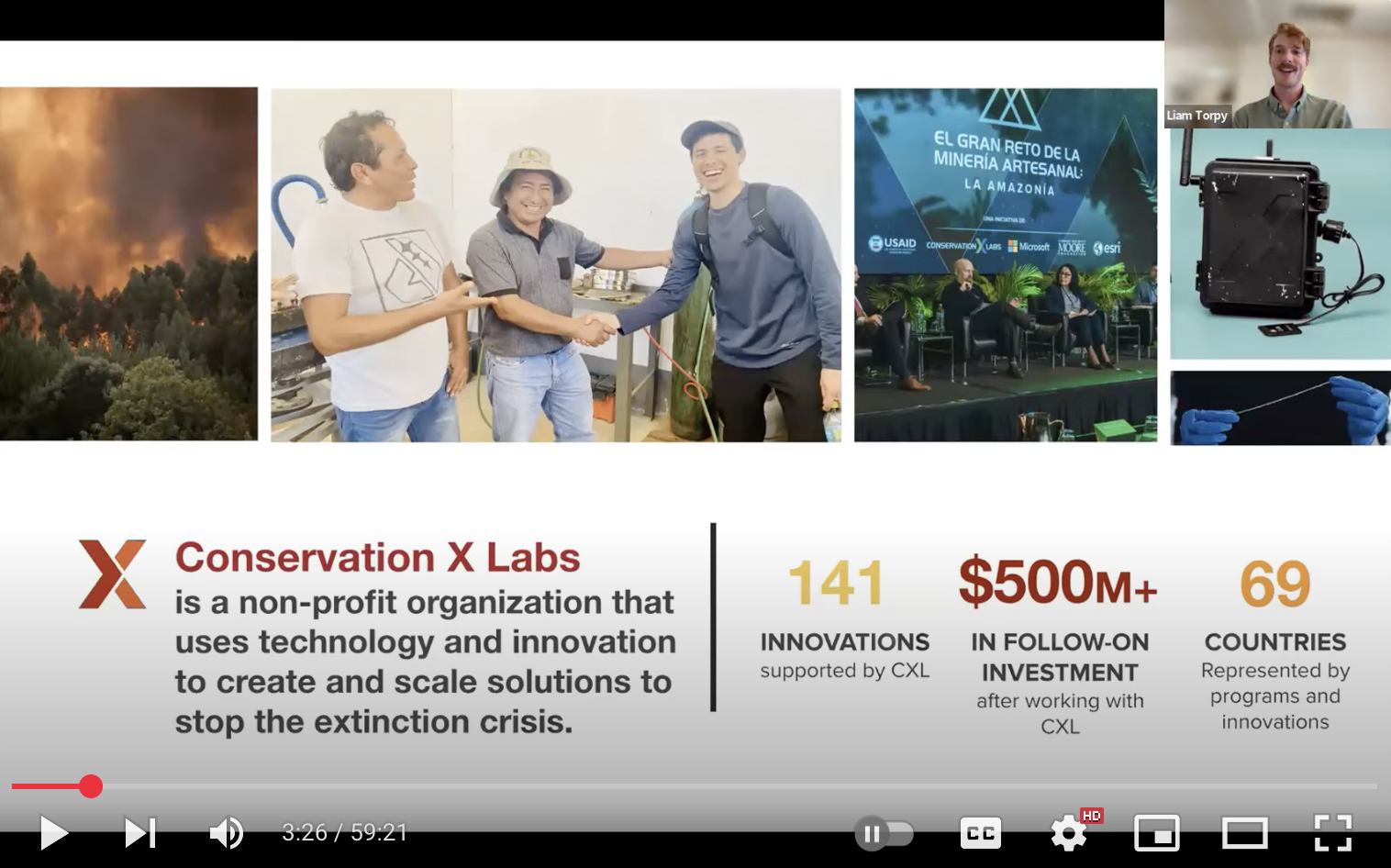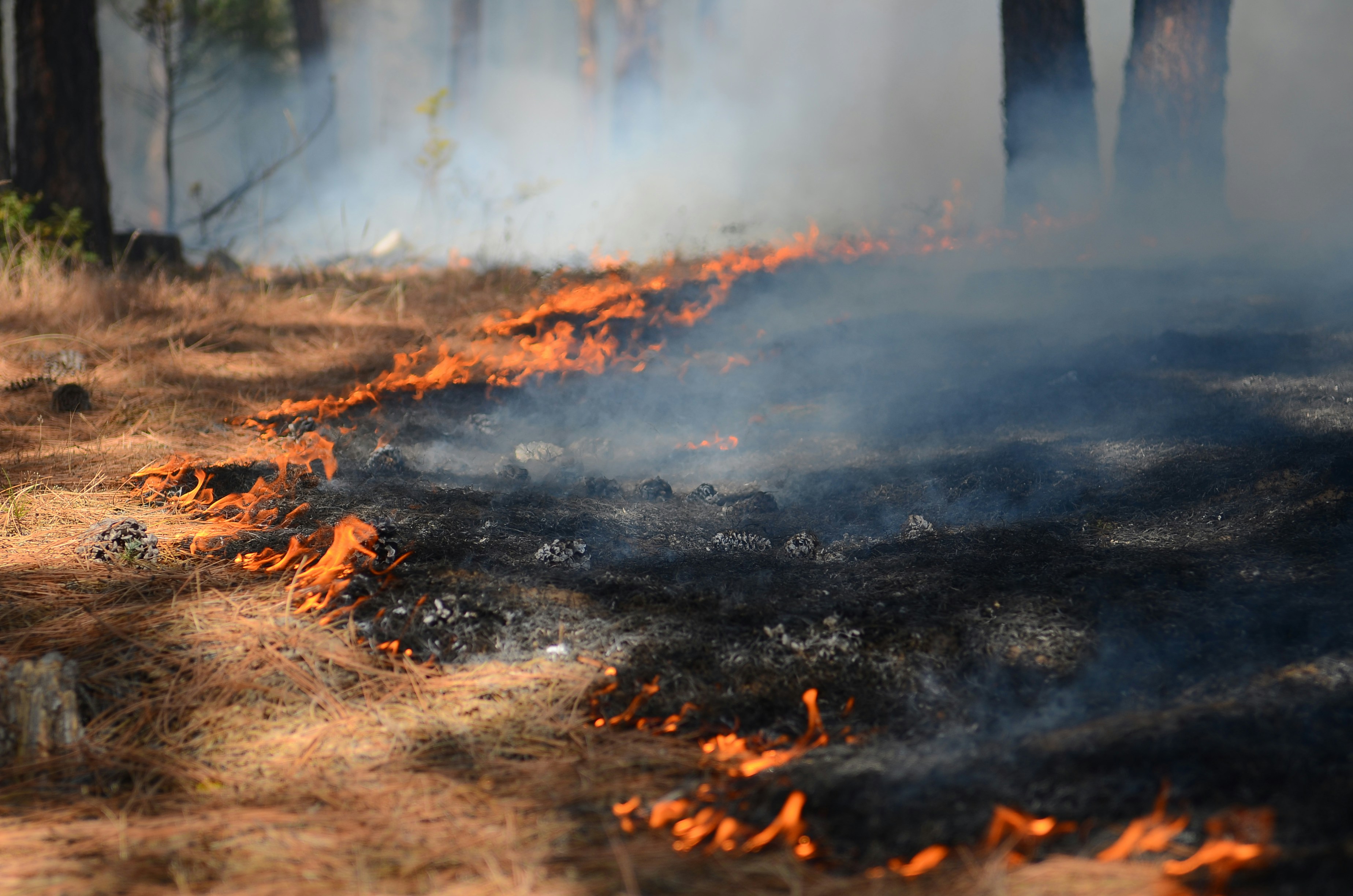
Innovators, community members, and experts from around the world recently convened for a webinar hosted by the Fire Grand Challenge team of Conservation X Labs to discuss how Indigenous fire stewardship is driving innovation in fire management and technology. The session, featuring panelists from the Kalispel Tribe of Indians, the Indigenous Futures Society, and Biomasa A.C., highlighted the braiding diverse knowledge spheres of traditional knowledge, data, and technology to strengthen community-led fire management approaches.
The examples shared in the webinar clearly show how this principle of braiding is being put into practice, leading to practical solutions across the fire lifecycle:
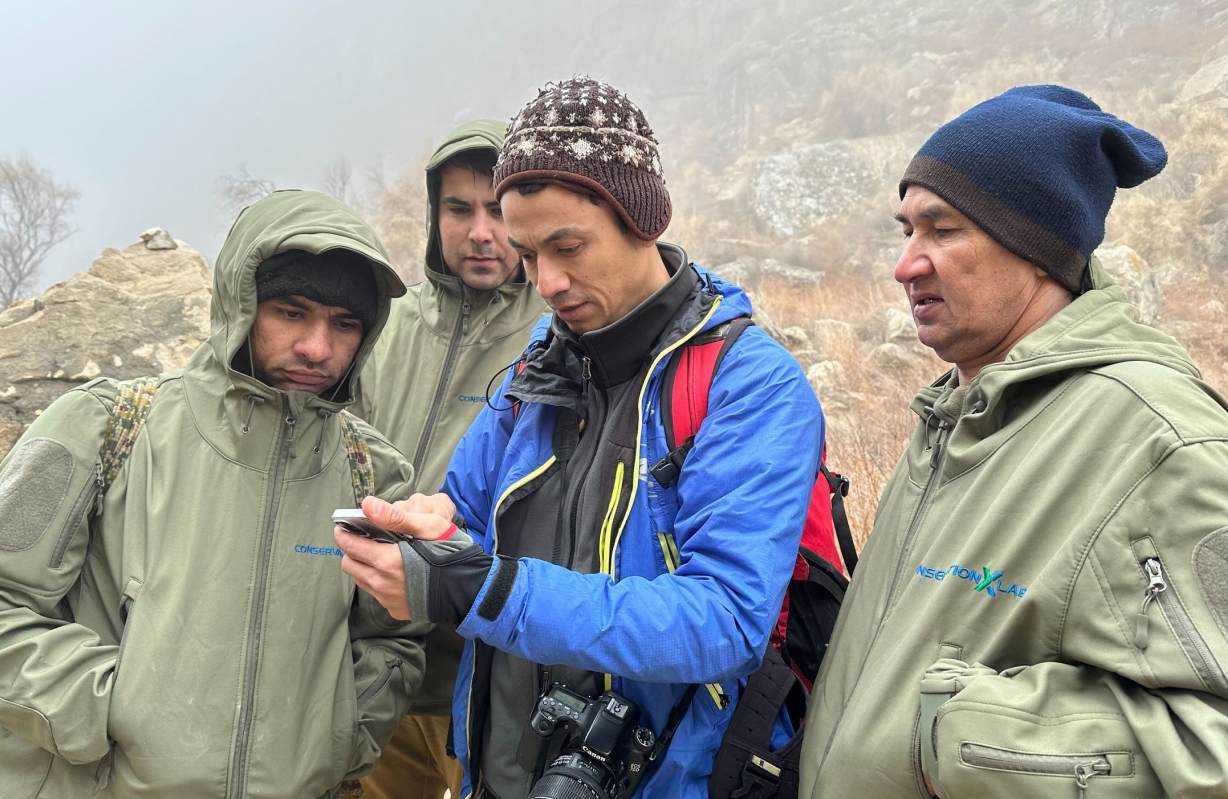
Pedro Martínez, Fire Management Consultant with Biomasa AC. in Chiapas, Mexico, spotlighted the solution built entirely on an braided knowledge model, a clear demonstration of the Challenge's vision. Biomasa, working in partnership with the International Savanna Fire Management Initiative (ISFMI), focuses on strengthening community capacity through the braiding of Indigenous fire stewardship, technical prescribed-fire practices, and scientific tools for measuring emissions and fire behavior.
This braiding of knowledge systems is strengthening local capabilities and addressing urgent cultural and environmental challenges:
"The goal is to formally braid this knowledge: Indigenous practice, technical use of fire, and modern science, to create a system that is legally and culturally sound, which is essential for ensuring intergenerational knowledge transfer and the community's future capacity." - Martinez shared.
The need to bridge the gap between traditional knowledge and official data was powerfully illustrated by Joel Adams, Fuels Management Specialist for the Kalispel Tribe of Indians in Northeast Washington State.
The Tribe partnered with Vibrant Planet to adapt their technology platform for fuels management, solving a critical disconnect: federal data often labeled their high-risk reservation as "low risk" (all green), contradicting local, on-the-ground knowledge of dense ladder fuels.
The Vibrant Planet platform allowed the Tribe to input crucial local data and planned treatment strategies (like mastication or thinning) to generate Scenario Risk Assessments (SARAs). This technical capability serves multiple vital functions:
"The nice thing about Vibrant Planet was able to use the FES data to kind of key in on high-risk areas. So, the red areas versus the green areas, which the Bureau sent me a map years ago showing the Kalispel Reservation as all green because we are next to the river," Adams highlighted, underscoring the platform's ability to validate local expertise.
The critical importance of Indigenous-led governance and data ownership was the focus of the presentation by Brian Wallace (CEO) and Matthew Moore (Program Executive) of the Indigenous Futures Society, partnering with the Washoe Tribe of Nevada and California in the Sierra Nevada Bioregion.
Their model demonstrates how technology can be used to advance regenerative sovereignty by putting cultural wisdom at the center of fire management. The team transitioned their platform, acquired by OpsReady, to be directed and controlled by the Indigenous Futures Society, focusing on platform independence and local ownership.
This approach achieves several critical goals for cultural and ecological revitalization:
"The whole idea is to integrate beyond cultural wisdom and knowledge into the wildfire effort, but also look at a broader expansion of these technologies and these applications into cultural restoration, food sovereignty spaces, cultural burning support,” said Brian Wallace, illustrating the holistic scope of their solution.
These stories prove that successful fire innovation is driven by empowerment, partnership, and the valuation of traditional knowledge as the foundation for modern technology.
The Fire Grand Challenge will culminate in a Solutions Summit in Oakland, California, on January 27th.
To learn more about the finalist teams, you can visit the Fire Grand Challenge page.