

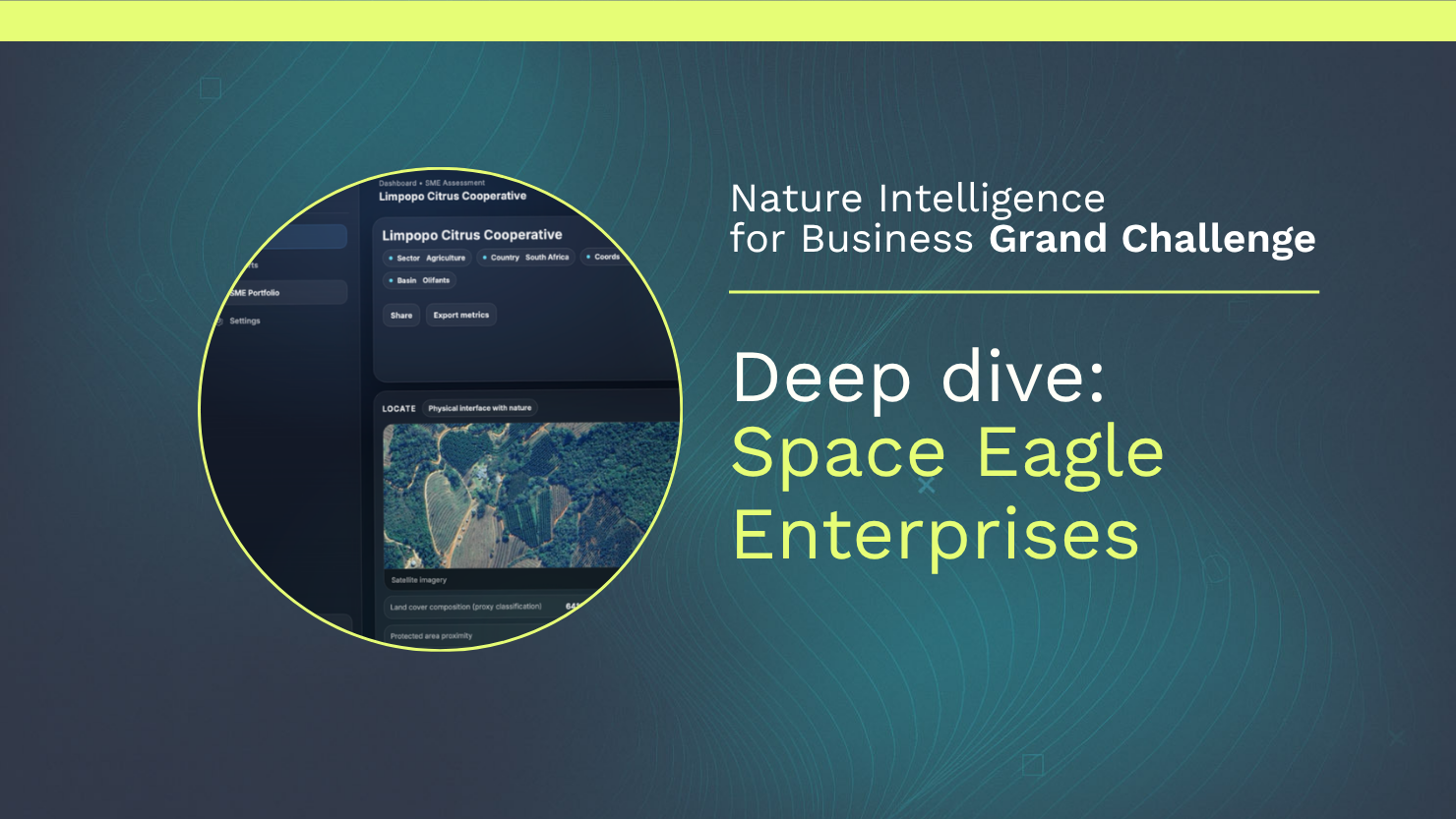
For Space Eagle, mapping environmental risk requires a planetary perspective. Founded by an astronomer and rooted in advanced cosmic data science, the platform’s Eagle Nature Insights engine repurposed machine learning techniques originally used for star and source identification to evaluate localized ecosystem health.
-
The analytical frameworks used to study the universe and those used to map terrestrial ecology share a surprising structural foundation. Both fields rely on processing vast, multi-dimensional datasets to detect faint signals, isolate patterns, and predict complex changes over time. Historically, however, these advanced data science tools have remained locked within academia or high-level defense industries, completely disconnected from the immediate, practical needs of local businesses and regional governments. This technology gap leaves many organizations highly vulnerable to rapid climate changes and hidden ecosystem dependencies that they lack the infrastructure to detect.
This gap is particularly visible across the African continent, where diverse regional biomes and smallholder supply chains face compounding environmental pressures. When nature intelligence tools are built exclusively around Northern Hemisphere data models or require highly specialized internal teams to operate, they become structurally inaccessible to the local enterprises that form the backbone of the economy. To build true climate resilience, advanced geospatial analytics must be democratized—repackaging complex remote sensing data into a streamlined, highly adaptable format that translates raw environmental fluctuations into immediate, actionable insights for any organizational scale.
Repurposing Astronomical Code for Climate Resilience
This unique cross-disciplinary approach is precisely what powers the core technology of South Africa-based Space Eagle. Building upon a decorated foundation in disaster risk intelligence—which previously earned top recognition at the G20 Research Innovation Hackathon—the development team expanded their proprietary source-identification algorithms to map terrestrial landscapes. Instead of tracking distant celestial bodies, the engine processes multi-spectral satellite imagery to isolate overlapping environmental trends, seamlessly matching local business footprints with the Taskforce on Nature-related Financial Disclosures (TNFD) risk architecture.
The true power of this software lies in its structural versatility, allowing the same underlying algorithms to solve radically different localized problems:
This analytical flexibility makes the platform highly valuable for public sector and municipal planners who must coordinate infrastructure protections across vast, changing territories. By analyzing how localized water stress or soil erosion impacts community roads and supply lines, the system helps decision-makers transition from reactive crisis management to long-term preventive capital planning. This structured foresight ensures that infrastructure investments actively reinforce, rather than deplete, the surrounding ecosystem's natural resilience.
The Grand Challenge Victory
Space Eagle was named an official winner of the Nature Intelligence for Business Grand Challenge—a global competition convened by Conservation X Labs, the Taskforce on Nature-related Financial Disclosures (TNFD), and the United Nations Development Programme (UNDP) to find affordable, accessible nature data tools for small and medium-sized enterprises (SMEs).
As the sole African innovator to reach the top tier of this competitive international arena, Space Eagle's victory represents a major milestone for regional technology development. The Grand Challenge provided the team with an active global sandbox to validate that data science methodologies born on the African continent can deliver world-class, universally scalable climate analytics.
By proving that advanced astronomical imaging techniques can be adapted into an accessible, cost-effective environmental risk engine, Space Eagle has set a new benchmark for cross-disciplinary innovation. Their work demonstrates that protecting our planet requires utilizing our most sophisticated data tools to see the world clearly, showing that the future of nature-positive business is already here.
